
Portfolio Consulting
Overview
Portfolio consulting is built for clients who want a customized allocation rather than a one-size-fits-all model. We work with individuals, family offices, and institutions that need control over tax lot management, sector exposure, and factor tilts without giving up professional oversight.
Every engagement starts with a diagnostic of your current holdings: concentration risk, overlapping funds, tax-lot drag, and fee layering are the four issues we find most often. From there we build a target portfolio and a transition plan that manages the tax impact of getting there.

We offer both discretionary managed accounts and consulting-only engagements where you retain trading authority and we provide the analysis, rebalancing recommendations, and quarterly performance attribution.
For clients with multiple accounts across different custodians, we build a consolidated view so asset allocation decisions are made across the whole portfolio, not account by account. That consolidated view is also what drives our tax-loss harvesting recommendations each year.
Key Benefits
Direct control over tax-lot decisions and sector exposure, paired with institutional-grade analytics, gives clients a portfolio that's built around their specific goals instead of a generic model.
No. Every portfolio consulting engagement is built and reviewed by a dedicated advisor. We use analytics tools to support the process, but allocation decisions are never fully automated.
In most cases, yes. We work across the major custodial platforms and will only recommend a transfer if your current custodian meaningfully limits the strategy we're building.
Rebalancing is triggered by allocation drift bands rather than a fixed calendar, typically reviewed monthly and adjusted whenever an asset class moves outside its target range.
Stats & Charts
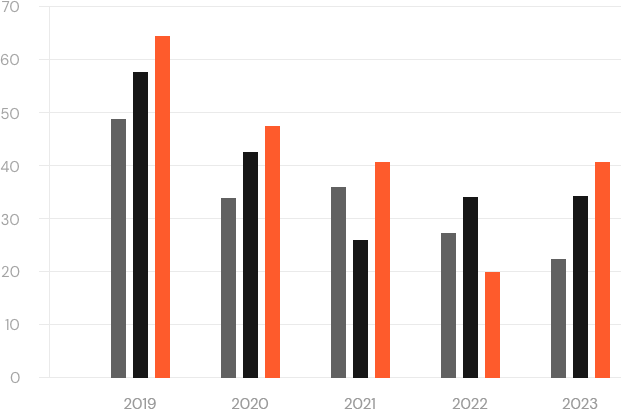
Portfolios we've consolidated from multiple advisors typically had between 3 and 5 overlapping fund positions before the initial review, each one adding cost without adding diversification.
Systematic tax-loss harvesting, applied consistently across a full calendar year rather than only in December, has historically added meaningful after-tax value versus one-time year-end harvesting.
Consolidated reporting across custodians also makes it easier to catch style drift early, before a single sector or manager grows into an outsized share of the total portfolio.

Expect and deliver the highest quality outcomes.
Our purpose is to build trust and maintaining a long lasting relationships with our clients.
Acknowledge needs and objectives

We prepare for your meeting by identifying key milestones or events that have happened since we last met. Then we review your portfolios to see if they’re well positioned to meet
Provide a comprehensive long term perspective

We prepare for your meeting by identifying key milestones or events that have happened since we last met. Then we review your portfolios to see if they’re well positioned to meet
Establish confidence and discuss opportunities

We prepare for your meeting by identifying key milestones or events that have happened since we last met. Then we review your portfolios to see if they’re well positioned to meet
What Our Customers Feel About Our Services!
When our customers succeed, so do we!!
It’s been an excellent experience. Apex Advisors team of consultants is a trusted partner; they took the necessary time to understand our operations and needs, which was essential for our providers and clients. They were professionals and made the right changes and adjustments to align project team with our culture and needs.

Dana Wade Sr
Working with Apex Advisors gave our leadership team a level of financial discipline we simply didn't have before. They didn't just hand us a report and leave; they stayed through implementation until our own team could run the process independently.

Ann John